Skip to navigation Skip to main content
  • Fields
  • Features
  • Addons
  • WordPress CRM Plugin
Auto Form Builder
  • Fields
  • Features
  • Addons
  • WordPress CRM Plugin
Download FREE
Auto Form Builder
Download FREE

Home/Tutorials
Tutorials

Hidden Fields: Passing Data Without User Input

analyticsform datahidden fieldsmetadatatrackingwordpress forms
Hidden Fields
Table of Contents

  • What Are Hidden Fields in Auto Form Builder?
  • Hidden Fields vs Other “Hidden” Features
  • Which Field Types Support Hidden Fields?
  • How to Add a Hidden Field
  • Practical Use Cases
  • Where Hidden Field Data Appears
  • Combining Hidden Fields with Conditional Logic
  • Best Practices
  • Limitations to Know
  • Frequently Asked Questions
  • Get Started with Auto Form Builder

Not every piece of form data should come from a visitor typing into a box. Sometimes you need to tag a submission with context your team already knows — which landing page the form came from, which campaign drove the click, or which department should handle the request.

Auto Form Builder includes a built-in Hidden Field option on supported input fields. Enable it in the field settings, set a Hidden Value, and that value is submitted with every entry — without showing anything on the front end.

Last updated: Last update 21 August

Table of Contents

  • What Are Hidden Fields in Auto Form Builder?
  • Hidden Fields vs Other “Hidden” Features
  • Which Field Types Support Hidden Fields?
  • How to Add a Hidden Field
  • Practical Use Cases
  • Where Hidden Field Data Appears
  • Combining Hidden Fields with Conditional Logic
  • Best Practices
  • Limitations to Know
  • Frequently Asked Questions
  • Get Started with Auto Form Builder

What Are Hidden Fields in Auto Form Builder?

A hidden field is not a separate field type in the sidebar. It is a setting you enable on an existing field — such as a Text Input, Email, Dropdown, or Number field.

When you check Hidden Field in the field settings:

  • The field is not visible to visitors on the live form.
  • You configure a Hidden Value that is sent with every submission.
  • The value is stored in your submissions inbox and included in notification emails via placeholders like {submission_data}.
  • On the front end, the field renders as a standard HTML <input type="hidden"> carrying that value.

Hidden fields are for data you control, not data visitors enter. They are ideal for metadata, routing tags, and context that should stay consistent for a given form embed or landing page.

Hidden Fields vs Other “Hidden” Features

Auto Form Builder uses several visibility concepts. They sound similar but behave differently:

Hidden Field setting (isHidden)

Always invisible. Always submits the configured Hidden Value. Use for lead source, campaign IDs, or department codes you set in the builder.

Conditional logic (show/hide)

Fields appear or disappear based on visitor answers in real time. When hidden by conditional logic, required validation is skipped. Use when visibility depends on what the visitor selects — not for fixed metadata.

HTML Block

Display-only content such as headings and instructions. HTML Blocks are not submitted and never appear in submission records. Use for section labels, not for passing data.

System hidden inputs

The plugin automatically includes internal hidden inputs (such as the form ID) needed for processing. You do not configure these — they are handled by the plugin behind the scenes.

Which Field Types Support Hidden Fields?

The Hidden Field checkbox appears in the settings panel for most input field types, including:

  • Text Input and Text Area
  • Email and Phone
  • Number, Date, and Time
  • Dropdown, Radio Buttons, and Checkbox
  • Name and Address
  • File Upload

On Text Input fields, hidden mode is mutually exclusive with Password Field mode — you cannot use both on the same field. Enabling hidden sets the input type to hidden; enabling password mode disables hidden.

When you disable hidden mode, the Hidden Value is cleared automatically so a stale value is not left in the field configuration.

How to Add a Hidden Field

Step 1: Add a field to your form

Drag a field type that supports hidden mode into your form — a Text Input is the most common choice for metadata tags like lead source or campaign ID.

Step 2: Give it a clear internal label

Set the field label to something your team will recognize in submissions — for example, “Lead Source” or “Campaign ID.” Visitors will not see this label on the front end, but it appears in the submissions inbox and notification emails.

Step 3: Enable Hidden Field

In the field settings, check Hidden Field. The description confirms: the field will not be visible to users but will be included in form submissions.

Step 4: Set the Hidden Value

Enter the value that should be submitted every time — for example, pricing-page, google-ads-spring, or sales-team. This maps to the field’s default value and is sent with each submission.

Step 5: Save and test

Preview the form and confirm the hidden field does not appear visually. Submit a test entry, then open the submission in Auto Form Builder → Submissions to verify the hidden value was recorded.

Practical Use Cases

Lead source tracking

Embed the same form on multiple pages, or create a copy of the form per landing page, each with a different Hidden Value — homepage, pricing, blog-sidebar. Your team instantly knows where each lead originated.

Campaign and UTM-style tagging

Set a hidden campaign identifier such as utm_campaign=spring-sale or a short internal code like SP26. Pair with conditional notification rules to route submissions from specific campaigns to the right inbox.

Department or team routing metadata

Add a hidden department code (support, sales, billing) on forms linked from different site sections. Filter or search submissions by this value in the admin inbox.

Pre-set service or product context

When each service has its own landing page, duplicate the form and set a hidden service slug (web-design, print, installation) instead of asking visitors to choose again.

Affiliate or partner IDs

Pass a static partner identifier on co-branded pages so commissions and referrals can be tracked in submission records without exposing an extra field to visitors.

Where Hidden Field Data Appears

Hidden field values behave like any other submitted field:

  • Submissions inbox — View, filter, star, and export entries with the hidden value included in the submission data.
  • Admin notification emails — Included when you use {submission_data} in the notification message, or in the default notification layout.
  • User confirmation emails — Hidden values are part of the submission; they typically appear only if your confirmation template includes submission details.
  • Import/export — Hidden values export with the rest of the submission JSON.

Enable Use submitter's email as Reply-To on your notification settings so your team can reply directly to the visitor while still receiving the full submission context including hidden metadata.

Combining Hidden Fields with Conditional Logic

Hidden fields can also use conditional logic like any other field. For example, you could show a visible follow-up question only when a hidden department code matches a certain value — though in most cases it is simpler to keep hidden fields unconditional and use visible fields with conditional logic for visitor-driven branching.

Remember the distinction: a field hidden by conditional logic depends on visitor input and may not be submitted if conditions are not met. A field marked as a Hidden Field always submits its configured value regardless of other answers.

Best Practices

  • Use descriptive field labels. “Lead Source” is clearer in submissions than a cryptic field name like field_abc123.
  • Keep values short and consistent. Use lowercase slugs or codes (pricing-page) rather than long sentences — easier to filter and search.
  • One hidden field per metadata point. Separate lead source, campaign, and department into individual hidden fields instead of cramming everything into one value.
  • Duplicate forms for different static contexts. Auto Form Builder sets Hidden Values in the builder — they are static per form. For different landing pages with different tags, use separate form copies or embed different forms.
  • Do not use hidden fields for secrets. Hidden input values are visible in the page HTML source. Never store API keys, passwords, or sensitive tokens in hidden fields.
  • Test after changes. Submit a test entry whenever you update a Hidden Value to confirm it appears correctly in the inbox.

Limitations to Know

  • Static values only. Hidden Values are configured in the form builder. Auto Form Builder does not include a built-in option to auto-populate hidden fields from URL query parameters (such as ?utm_source=google). For dynamic URL-based tracking, use separate forms with different Hidden Values, or handle pre-fill through your theme or custom integration.
  • Not for visitor-entered data. If visitors need to provide the information, use a visible field instead.
  • Not a replacement for analytics. Hidden fields tag individual submissions. For aggregate traffic analysis, continue using your analytics platform alongside form metadata.
  • HTML Blocks cannot pass data. Use a hidden input field, not an HTML Block, when you need a value stored in submissions.

Frequently Asked Questions

How do I add a hidden field in Auto Form Builder?

Add any supported input field (typically Text Input), open its settings, check Hidden Field, and enter a Hidden Value. The field will not appear to visitors but its value will be submitted with every entry.

Is there a separate Hidden Field type in the field sidebar?

No. Hidden fields are a setting on existing field types, not a standalone field in the builder palette. Enable the Hidden Field checkbox in any supported field's settings panel.

Do hidden field values appear in submission records?

Yes. Hidden fields are submitted and stored like visible fields. They appear in the submissions inbox and in notification emails when you include {submission_data} or use the default notification layout.

Can visitors see or edit hidden field values?

Hidden fields are not displayed as form inputs on the page. However, the HTML source of the page contains the hidden input value, so treat hidden fields as convenient metadata tags — not as a security mechanism for sensitive data.

What is the difference between a hidden field and conditional logic?

A hidden field always submits a fixed value you configure in the builder and is never shown to visitors. Conditional logic dynamically shows or hides visible fields based on visitor answers — hidden conditional fields are not validated and may not be submitted when conditions are not met.

Can I auto-fill hidden fields from URL parameters?

Auto Form Builder sets static Hidden Values in the form builder. There is no built-in URL query parameter mapping. For page-specific tracking, create form copies with different Hidden Values or integrate pre-fill through custom code outside the plugin.

Get Started with Auto Form Builder

Hidden fields are included in the free plugin — add metadata to any form in seconds without custom code or extra plugins.

Download:
Auto Form Builder on WordPress.org

Plugin last updated: Last update 21 August

Build forms that embed anywhere — free

Auto Form Builder lets you create multi-step forms, calculators, and lead capture forms in WordPress, then embed them on any site with a single line of code.

Install the free plugin

  • WordPress Form Builder
  • WordPress Form Plugin
  • WordPress Contact Form Plugin
  • Embed forms anywhere
  • WordPress Form Builder For Nonprofits
  • WordPress Form Plugin For Real Estate
  • WordPress Form Builder For Schools
  • WordPress Form Plugin For Restaurants
  • WordPress Form Builder For Membership Sites
  • WordPress Form Plugin For Woocommerce
  • WordPress Form Builder For Freelancers
  • WordPress Form Plugin For Coaches
  • WordPress Form Plugin For Healthcare
  • WordPress Form Plugin With Webhooks
  • WordPress Form Plugin With Hooks
  • WordPress Form Builder With Custom Fields
  • Create Custom Post Type Form WordPress
  • WordPress Form Plugin Rest Api
  • WordPress Form Plugin With Webhooks
  • WordPress Form Builder Plugin Recommendation
  • Which Form Plugin Should I Use For WordPress
  • Lightweight Form Plugin For WordPress Site
  • Best Form Builder For Small Business WordPress
  • WordPress Form Plugin That Works With Elementor
  • Form Builder That Saves To Database WordPress
  • WordPress Plugin To Create Forms Easily
  • No Code Form Builder WordPress
  • Best WordPress Form Plugin For Beginners
  • WordPress Form Plugin For Landing Pages
  • WordPress Form Plugin With Analytics
  • WordPress Form Builder For Agencies
  • WordPress Form Plugin With Automation
  • Ai Form Builder WordPress
  • WordPress Form Plugin For Ecommerce
  • WordPress Order Form Plugin
  • WordPress Application Form Plugin
  • WordPress Survey Form Plugin
  • WordPress Quote Request Form
  • WordPress Newsletter Signup Form
  • WordPress Appointment Form Plugin
  • WordPress Subscription Form Plugin
  • WordPress Registration Form Plugin
  • WordPress Login Form Plugin
  • WordPress Event Registration Form
  • WordPress Donation Form Plugin
  • WordPress Job Application Form Plugin
  • WordPress Request A Quote Form
  • WordPress Rsvp Form Plugin
  • WordPress Support Ticket Form
  • WordPress File Upload Form
  • WordPress Payment Form Plugin
  • WordPress Custom Form Plugin
  • WordPress Form Builder For Developers
  • WordPress Form Api
  • How To Create A Feedback Form In WordPress
  • How To Build A Lead Capture Form In WordPress
  • How To Create A Survey Form In WordPress
  • How To Create An Order Form In WordPress
  • How To Add A Popup Form In WordPress
  • WordPress Form Builder Vs Contact Form 7
  • Wpforms Alternative
  • Wpforms Alternative Free
  • Contact Form 7 Alternative
  • Gravity Forms Alternative Free
  • Ninja Forms Alternative
  • Formidable Forms Alternative
  • Fluent Forms Alternative
  • Contact Form 7 Vs Wpforms
  • Gravity Forms Vs Wpforms
  • Free Alternative To Gravity Forms
  • Better Than Contact Form 7
  • WordPress Lead Generation Form
  • WordPress Booking Form Plugin
  • WordPress Feedback Form Plugin
  • WordPress Form Builder With Crm
  • WordPress Form Builder With Database
  • WordPress Form Builder With Api
  • WordPress Form Builder With Recaptcha
  • WordPress Responsive Form Plugin
  • WordPress Ajax Form Plugin
  • WordPress Form Builder With Calculator
  • How To Create A Form In WordPress
  • How To Add A Contact Form In WordPress
  • How To Build A Custom Form In WordPress
  • How To Create A Form In WordPress Without Plugin
  • What Is The Best Form Builder For WordPress
  • How To Add A Form To A WordPress Page
  • How To Create A Contact Form In WordPress For Free
  • Which WordPress Form Plugin Is The Best
  • How To Make A WordPress Form
  • How To Embed A Form In WordPress
  • How To Create A Multi Step Form In WordPress
  • How To Add A Registration Form In WordPress
  • How To Create A Booking Form In WordPress
  • Contact Form For WordPress
  • Form Plugin For Wp
  • WordPress Form Tool
  • Wp Form Plugin Free
  • WordPress Form Maker Plugin
  • Free WordPress Form Builder
  • Free WordPress Form Plugin
  • Free WordPress Contact Form Plugin
  • Free Form Builder Plugin WordPress
  • Best Free WordPress Form Builder
  • Free Contact Form WordPress
  • Free WordPress Form Builder Plugin
  • WordPress Form Builder Free Download
  • Free Form Plugin For WordPress
  • Free Drag And Drop Form Builder WordPress
  • 100% Free WordPress Form Plugin
  • WordPress Form Plugin No Cost
  • Best WordPress Form Builder
  • Best WordPress Form Plugin
  • Best WordPress Contact Form Plugin
  • Best Free Form Builder For WordPress
  • Best Form Plugin WordPress 2026
  • Top WordPress Form Builders
  • Best Contact Form Plugin WordPress
  • Best WordPress Form Builder Plugin Free
  • Best Lightweight Form Builder WordPress
  • Best Simple Form Plugin WordPress
  • WordPress Drag And Drop Form Builder
  • WordPress Form Builder Without Coding
  • Easy Form Builder WordPress
  • Simple Contact Form WordPress
  • WordPress Form Builder With Conditional Logic
  • WordPress Multi Step Form Plugin
  • WordPress Form Builder With File Upload
  • WordPress Form Builder With Payment
  • WordPress Form Builder With Email Notification
  • WordPress Form Builder Shortcode
  • WordPress Form Builder With Spam Protection
  • Lightweight WordPress Form Plugin
  • WordPress Form Builder Gutenberg
  • WordPress Form Builder Plugin
  • WordPress Forms Plugin
  • WordPress Contact Forms
  • WordPress Forms
  • Form Builder Plugin
  • Form Builder Plugin WordPress
  • Contact Form Wp
  • Plugin Wp Forms
  • Form Plugin WordPress
  • Contact Form WordPress
  • Wp Form Builder
  • Wp Forms Plugin
  • Wp Contact Form
  • WordPress Form Creator
  • Form Maker WordPress
  • WordPress Form Generator
  • Form Builder For WordPress
analyticsform datahidden fieldsmetadatatrackingwordpress forms
Newer
International vs Local Address Forms: Which Preset to Use?
Back to list
Older Creating a Quote Request Form with Conditional Logic

Related Posts

How to Delete Multiple Form Submissions at Once
12 Apr
Tutorials

How to Delete Multiple Form Submissions at Once

Posted by author-avatar Auto Form Builder
July 13, 2026
0
Learn how to bulk delete form submissions in WordPress. Remove multiple entries at once to clean up spam, test data, and old submissions efficiently.
Continue reading
Managing WordPress Form Submissions
11 Apr
Guides

The Complete Guide to Managing WordPress Form Submissions

Posted by author-avatar Auto Form Builder
July 13, 2026
0
Master WordPress form submission management. Learn to view, filter, search, star, export, and organize form entries like a pro with this complete guide.
Continue reading
How to Search Form Submissions in WordPress
10 Apr
Tutorials

How to Search Form Submissions in WordPress

Posted by author-avatar Auto Form Builder
July 13, 2026
0
Learn how to search and find form submissions in WordPress. Filter by date, form, status, and search across all submission data.
Continue reading
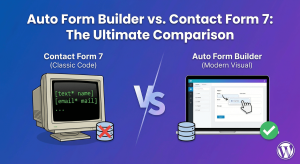
Auto Form Builder vs. Contact Form 7
08 Apr
Comparisons

Auto Form Builder vs. Contact Form 7: Which is Better?

Posted by author-avatar Auto Form Builder
July 13, 2026
0
Comparing Auto Form Builder and Contact Form 7 for WordPress. See which form plugin offers better ease of use, features, and value for your website.
Continue reading
Managing Contact Form Submissions in WordPress
07 Apr
Tutorials

Managing Contact Form Submissions in WordPress

Posted by author-avatar Auto Form Builder
July 13, 2026
0
Learn how to view, organize, search, filter, and export your WordPress form submissions. Complete guide to submission management.
Continue reading
GDPR-Compliant Form Plugins
06 Apr
Privacy

GDPR-Compliant Form Plugins: Keep Data on Your Server

Posted by author-avatar Auto Form Builder
July 13, 2026
0
Learn why storing form data on your own server helps with GDPR compliance. Choose form plugins that keep your user data local and under your control.
Continue reading
How to Filter Form Submissions by Date
04 Apr
Tutorials

How to Filter Form Submissions by Date

Posted by author-avatar Auto Form Builder
July 13, 2026
0
Learn how to filter WordPress form submissions by date. Find entries from specific time periods quickly using date range filters.
Continue reading
How to Bulk Edit Form Submissions in WordPress
01 Apr
Tutorials

How to Bulk Edit Form Submissions in WordPress

Posted by author-avatar Auto Form Builder
July 13, 2026
0
Learn how to bulk edit, delete, and manage form submissions in WordPress. Save time with mass actions on multiple entries at once.
Continue reading
Future-Only Date Selection
31 Mar
Tutorials

Future-Only Date Selection: Event Registration Forms

Posted by author-avatar Auto Form Builder
July 13, 2026
0
Learn how to restrict date fields to future dates only for event registration forms. Block past dates and set booking windows in WordPress.
Continue reading
Building Quantity Fields
30 Mar
Tutorials

Building Quantity Fields: Number of Guests, Items, etc.

Posted by author-avatar Auto Form Builder
July 19, 2026
0
Learn how to create quantity fields in WordPress forms. Collect numbers for guests, items, tickets, and more with proper validation and limits.
Continue reading
How to Star Important Form Submissions
29 Mar
Tutorials

How to Star Important Form Submissions

Posted by author-avatar Auto Form Builder
July 13, 2026
0
Learn how to star and flag important form submissions in WordPress. Prioritize leads, mark urgent requests, and organize your form entries effectively.
Continue reading
How to Set Up Email Notifications for WordPress Forms
27 Mar
Tutorials

How to Set Up Email Notifications for WordPress Forms

Posted by author-avatar Auto Form Builder
July 13, 2026
0
Learn how to set up email notifications for your WordPress forms so you never miss a submission. Step-by-step guide with Auto Form Builder.

Continue reading

    Leave a Reply Cancel reply

    Your email address will not be published. Required fields are marked *

    autoformbuilder logo

    We build WordPress form tools that save you time, look beautiful, and convert visitors into leads—without the complexity.

    Fields

    • Address
    • Checkbox
    • Date
    • Dropdown
    • Email
    • File Uploads
    • Name Field
    • Number
    • Phone
    • Radio Buttons
    • Text Area
    • Text Input
    • Time

    Features

    • Conditional Logic
    • Drag Drop Builder
    • Form Styling
    • Submission Management
    • WordPress Form Generator

    Add-Ons

    • Addons
    • Entry Tags
    • Google Sheets

    Auto Form Builder

    • About
    • Contributors
    • Download FREE
    • Blog
    • Changelog
    • Contact
    • PHP Development
    • Development Services
    • WordPress CRM Plugin
    • Support

    © 2026 Auto Form Builder. A product of Amora Digital (KVK: 99536811).

    • Fields
    • Features
    • Addons
    • WordPress CRM Plugin